
How to Choose Cosmetic Cream Jars That Protect Your Formula
Choosing the right packaging is an important decision for any skincare business. A cosmetic cream jar does more than hold a product. It affects how customers perceive your brand, how easily they use your formula, and how well the product stays protected during storage and transportation. The wrong jar can lead to leakage, difficult dispensing, or packaging that does not match your product’s quality. If you are launching a new skincare line or improving an existing product range, understanding how to choose cosmetic cream jars can help you make a more informed purchasing decision. Capacity, material, closure design, product compatibility, and branding all deserve careful attention before you place an order.
At PlasPack, packaging decisions should start with the product’s practical requirements and the customer’s experience. This guide explains the key factors to evaluate when selecting cosmetic cream jars for your skincare products.
Why Choosing the Right Cosmetic Cream Jar Matters
Skincare formulas vary in texture, ingredients, and intended use. A lightweight facial moisturizer has different packaging requirements from a thick night cream or a rich body butter. Your jar should accommodate the formula while remaining convenient for everyday use. Packaging also influences shelf presentation. A clean, well-designed jar can support a premium appearance, while a lightweight and functional option may be more appropriate for everyday skincare products. The goal is to find a balance between protection, usability, appearance, and cost.
1. How to Choose Cosmetic Cream Jars by Capacity and Dimensions
The first step is determining how much product each jar needs to hold. Common cosmetic jar sizes range from small sample containers to larger jars for body creams and professional skincare products. However, the correct capacity depends on your formula, serving size, and packaging requirements. Remember that volume and product weight are not always equivalent. A 50 mL jar does not necessarily hold 50 grams of every cream because different formulas have different densities.
Before selecting a size, consider these practical factors:
- Product quantity: Match the jar to the declared net contents and the amount customers typically use.
- Available dimensions: Check diameter, height, and opening width to ensure the jar fits your filling process and intended storage space.
- Customer convenience: Smaller jars may suit travel products or concentrated treatments, while larger formats can work well for body creams.
- Shipping and display: Consider carton dimensions, shelf space, packing efficiency, and the number of units per case.
Request a physical sample when possible. Fill it with your actual product and check the appearance, filling process, headspace, and ease of use before approving production.
2. Compare Cosmetic Jar Materials Before Buying
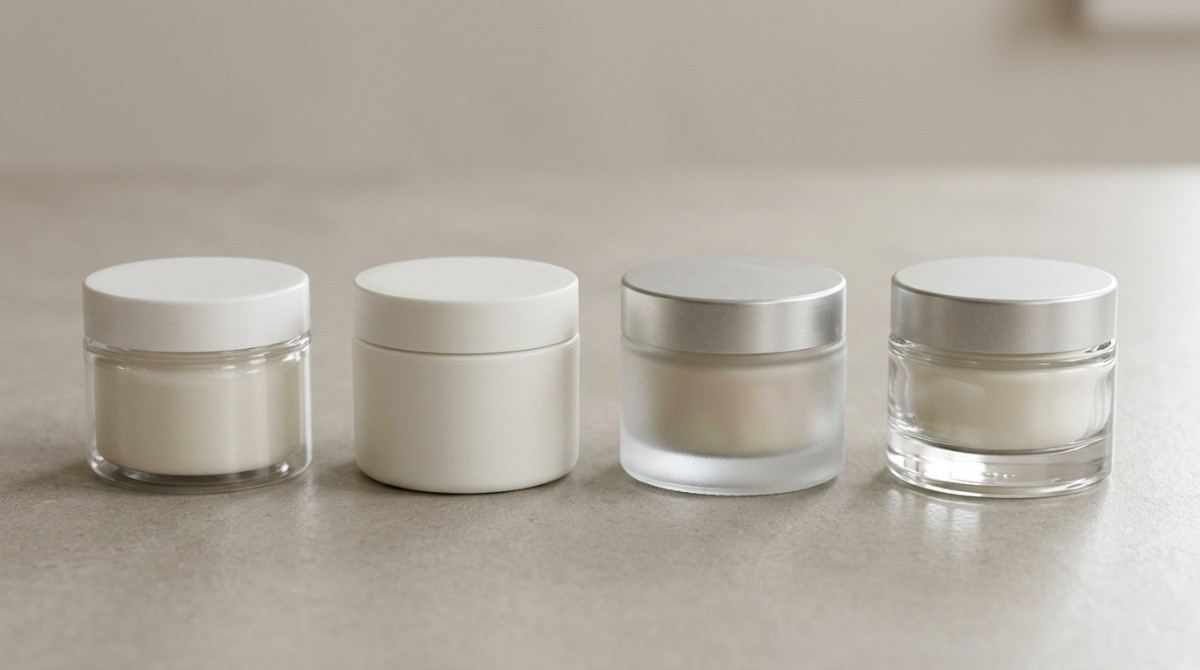
Material selection affects durability, appearance, weight, cost, and formula compatibility. Plastic and glass are common choices, but neither is automatically suitable for every skincare product. Plastic jars are often selected for their lighter weight and handling convenience. Depending on the resin, design, and wall thickness, they can also provide useful impact resistance. Glass jars can create a substantial, premium feel, although they generally weigh more and require additional care during transportation.
The following table provides a starting point for comparing common options.
| Material | Main advantages | Considerations | Potential applications |
|---|---|---|---|
| PET plastic | Lightweight, clear appearance, versatile styling | Verify compatibility and barrier requirements | Moisturizers and cosmetic creams |
| PP plastic | Lightweight and available in many designs | Appearance and barrier performance vary by construction | Everyday skincare and personal care |
| Acrylic | Glass-like appearance and premium presentation | Can cost more; assess scratching and compatibility | Premium cosmetic collections |
| Glass | Premium feel and good chemical resistance for many formulas | Heavier and breakable | Selected creams and luxury skincare |
These are general comparisons, not universal performance guarantees. The exact resin grade, colorants, wall construction, liner, and closure can change how the complete package performs. For a responsible material decision, test the actual formula inside the proposed packaging. Consider temperature exposure, transport conditions, potential discoloration, odor changes, and any changes in the product’s texture. PlasPack recommends evaluating the complete packaging system rather than choosing a material based on appearance alone.

3. Check Lid and Closure Compatibility
A jar body and its lid must work together. A closure that looks correct but does not fit securely can create problems during filling, distribution, and customer use. Screw caps are widely used because they are familiar and straightforward to open and close. Some designs include an inner liner or a separate sealing component to support a more secure closure. Other jars use specialized caps or additional inserts to improve the dispensing experience.
When reviewing closure options, focus on the following:
- Thread compatibility: Confirm that the cap and jar have matching specifications and engage correctly.
- Sealing performance: Check whether the selected liner or sealing system suits the formula and distribution conditions.
- Ease of opening: Ensure customers can open and close the package comfortably without excessive force.
- Leak and transport testing: Evaluate the assembled package under realistic shipping, handling, and storage conditions.
Do not assume that a tight-fitting lid automatically makes a package leakproof. The full design, including the sealing surface and manufacturing tolerances, determines performance. Sample testing is essential before committing to a large production run.
4. Evaluate Product Compatibility and Storage Requirements
Formula compatibility is one of the most important parts of selecting skincare packaging. Certain ingredients may interact with particular packaging materials, liners, or colorants. External conditions, including heat and light, can also influence product stability. For example, a formula containing sensitive active ingredients may require additional protection from light or oxygen. A thick balm may need a wider opening for easier access, while a lightweight cream may require more attention to leakage during shipping.
Before finalizing your packaging, consider these checks:
- Ingredient compatibility: Review the formula against the jar material, closure, liner, and any coatings.
- Stability testing: Monitor changes in color, odor, texture, and performance during appropriate storage tests.
- Environmental exposure: Evaluate expected temperature changes, sunlight exposure, and transportation conditions.
- Hygiene and use: Consider whether a wide-mouth jar suits the formula and whether a spatula or other dispensing accessory is appropriate.
A cosmetic jar does not automatically preserve a product’s shelf life or make it sterile. Product preservation depends on the formulation, manufacturing controls, package design, and validated testing. If a formula is sensitive or has demanding storage requirements, consult your formulation and packaging specialists before approval.
5. Strengthen Your Brand With Labels and Printing
Packaging is often the first physical interaction customers have with a skincare product. Its colors, finish, typography, and overall presentation help communicate the brand’s identity. A minimal white jar may suit a clinical skincare line, while a clear or colored container might complement a different brand aesthetic. Matte finishes, glossy surfaces, metallic accents, and custom printing can help create a consistent appearance across a product range. However, visual appeal should not come at the expense of legibility or usability. Labels must adhere properly to the selected surface, withstand expected handling, and leave enough space for the required product information.
When planning your jar’s branding, consider:
- Logo placement and visibility on curved surfaces.
- Label dimensions and adhesive suitability for the material.
- Print quality, color consistency, and finish durability.
- Space for ingredients, net contents, directions, warnings, and other applicable labeling information.
For products sold in the United States, review applicable FDA cosmetic labeling requirements before approving artwork. Avoid unsupported claims about a product’s benefits, safety, or performance. A professional label should be attractive, readable, and appropriate for the product being sold.
6. Plan Bulk Ordering Carefully
Buying cosmetic jars in bulk can help businesses manage unit costs and maintain a consistent supply. However, the lowest quoted price is not necessarily the best overall value. Freight, storage, defects, customization, and minimum order quantities can all affect the final cost.
Before approving a bulk purchase, establish your packaging specifications and ask suppliers for clear details about the order.
- Minimum order quantity: Confirm the minimum for standard jars, custom colors, printing, and special closures.
- Sampling and approval: Inspect samples and approve the final specifications before production.
- Total landed cost: Include unit price, tooling where applicable, freight, duties, handling, and packaging materials.
- Quality and replenishment: Ask about inspection procedures, acceptable tolerances, lead times, and the ability to reorder matching products.
A first production run is also an opportunity to validate the package before scaling up. Where possible, complete filling trials, closure checks, label testing, and shipping simulations before purchasing large quantities. Documenting the approved specifications helps reduce inconsistencies across future orders.
7. Why Choose PlasPack for Cosmetic Cream Jar Packaging?
Selecting a packaging supplier should involve more than comparing catalog images. A reliable supplier should help you understand the available specifications and identify questions that need to be resolved before production. At PlasPack, a practical approach to cosmetic packaging starts with understanding the product, target customer, and intended application. The objective is to help businesses evaluate options that align with their packaging requirements and brand presentation.
When discussing your project with PlasPack, prepare details about your product type, target capacity, preferred material, closure requirements, branding needs, and expected order volume. This information helps establish a clearer basis for comparing suitable options. Before placing your order, ask for samples, dimensional specifications, material details, customization availability, lead times, and quality documentation where applicable. Confirm all commercial and technical terms in writing. The right packaging decision is one that supports your formula, makes sense for your customers, and fits your business requirements. Careful evaluation at the beginning can reduce avoidable issues later.
Conclusion
Understanding how to choose cosmetic cream jars involves much more than selecting an attractive container. The right decision considers capacity, dimensions, material, closure compatibility, formula stability, branding, and the practical demands of bulk ordering. Start by identifying your product’s requirements, compare suitable packaging materials, and test samples using your actual formula. Then confirm the closure, artwork, quality specifications, and order costs before approving production. With a structured selection process and clear communication with your packaging supplier, PlasPack can be part of your evaluation process as you work toward packaging that reflects your brand and serves your customers.
Frequently Asked Questions
1. What size cosmetic cream jar is best for skincare products?
The best size depends on the product’s intended quantity, formula density, usage frequency, and target market. Small jars can suit samples and concentrated treatments, while larger formats are often used for body creams. Confirm both the volume and the dimensions before ordering.
2. Which material is best for cosmetic cream jars?
There is no single best material for every formula. PET, PP, acrylic, and glass each have different advantages and limitations. Compare weight, appearance, durability, cost, and formula compatibility, then test the complete packaging system.
3. How do I know if a cosmetic jar is compatible with my cream?
Review the jar material, closure, liner, and any coatings against your formula. Conduct suitable compatibility and stability tests under expected storage conditions. Check for changes in odor, color, texture, and package performance before approving production.
4. Are plastic cosmetic jars better than glass jars?
Plastic jars are generally lighter and less prone to breakage, while glass can provide a premium appearance and may suit certain formulations. The better option depends on your formula, shipping requirements, budget, sustainability goals, and customer expectations.
5. Can cosmetic cream jars be customized with my brand logo?
Many packaging suppliers offer options such as printed logos, adhesive labels, custom colors, and different surface finishes. Availability depends on the jar design, order quantity, printing method, and supplier capabilities. Request samples or artwork proofs before approving the final design.
6. What should I check before ordering cosmetic jars in bulk?
Confirm the minimum order quantity, unit price, material specifications, jar dimensions, closure fit, customization costs, lead time, and shipping expenses. Review physical samples and approve written specifications before production to reduce the risk of costly packaging problems.